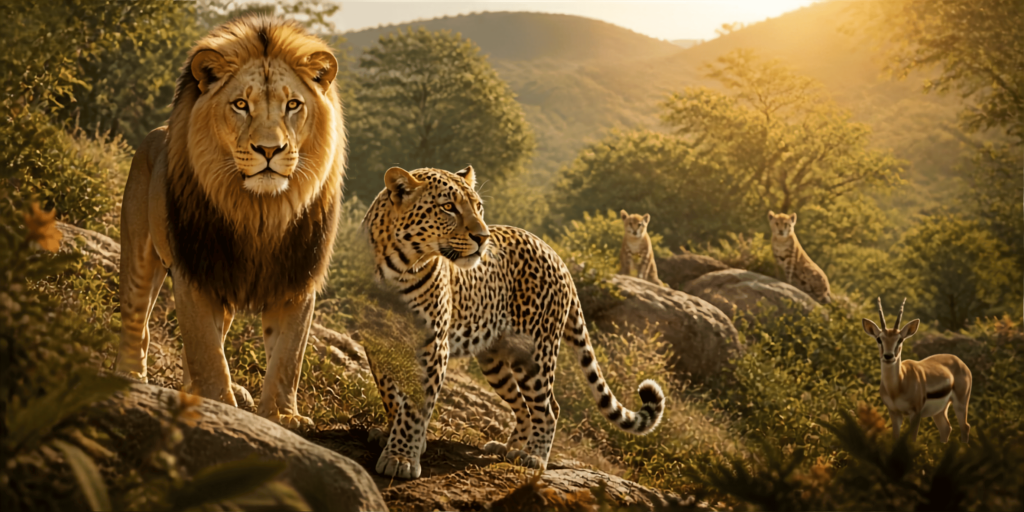
Also located just outside Plettenberg Bay, Jukani Wildlife Sanctuary is home to lions, tigers, leopards, and other big cats, most of them rescued from circuses, private ownership, or breeding operations unable to care for them properly. It’s a striking, sometimes sobering visit that pairs close animal viewing with a clear message about captive wildlife welfare.
A Sanctuary, Not a Zoo
Unlike a traditional zoo, Jukani positions itself firmly as a sanctuary, meaning its animals are not bred, traded, or used for cub petting or similar hands-on tourist interactions. Most residents arrived after being rescued from situations where they could no longer be kept safely or humanely, and the sanctuary’s spacious enclosures are designed with the animals’ welfare as the priority over visitor convenience.
What You’ll See
Guided walking tours take small groups past enclosures housing lions, tigers, leopards, and a scattering of other big cats, alongside occasional other rescued species. Guides typically share each animal’s individual backstory, many of which highlight the darker side of the exotic pet and captive breeding trade in South Africa.
The Educational Angle
Jukani leans heavily into education, using its animals’ individual histories to highlight the risks and welfare issues around private big cat ownership and unregulated breeding. It’s a more sobering experience than some wildlife attractions, but one that leaves most visitors with a clearer understanding of why sanctuaries like this are needed in the first place.
Visiting Tips
- Guided tours run at set times throughout the day, so check the schedule ahead of your visit.
- Allow around an hour to an hour and a half for the full walking tour.
- Photography is generally welcome, though check with your guide about flash near certain enclosures.
- Combine your visit with nearby Tenikwa or Monkeyland for a fuller wildlife-focused day near Plettenberg Bay.
Choosing Responsible Wildlife Attractions
For travellers keen to see big cats up close but wary of attractions involving cub petting or unclear breeding practices, sanctuaries like Jukani offer a middle ground: genuine proximity to the animals, without the ethical concerns attached to breed-and-interact style operations. It’s worth asking any wildlife attraction directly about their breeding and interaction policies if this matters to you.
A Memorable, If Sobering, Stop
Jukani isn’t the cheeriest stop on a Garden Route itinerary, given the backstories behind many of its residents, but it’s a genuinely memorable one, offering close views of animals most visitors would otherwise only see from a distance on safari, alongside a clearer picture of the welfare issues facing captive big cats in South Africa.