While most Garden Route trips stick to the coast, one of the best short detours you can make is inland, over the Outeniqua Pass, which climbs from George up through the Outeniqua Mountains toward Oudtshoorn and the Klein Karoo. The change in scenery, from coastal forest to dry, open mountain terrain, happens surprisingly quickly, and the views along the way are some of the best in the region.
Why This Drive Is Worth It
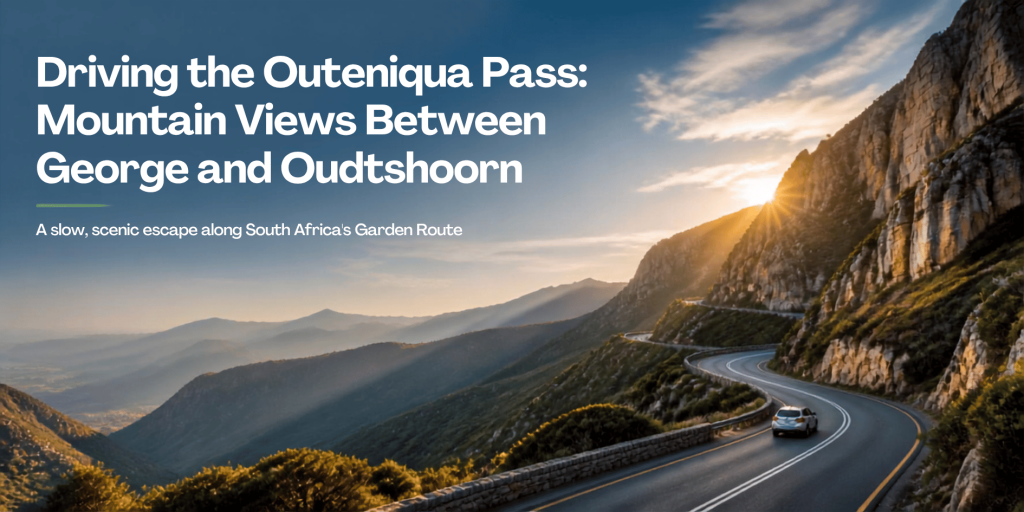
The Outeniqua Pass replaced the older, steeper Montagu Pass as the main route between George and Oudtshoorn, and it’s built with wide curves and good visibility, making it a comfortable drive even for those less confident on mountain roads. Several viewpoints along the way look back down over George and the coastal plain toward the sea, giving a real sense of just how much altitude you gain in a short distance.
What You’ll See
As you climb, the lush, green vegetation of the coastal side gives way to drier, more rugged mountain fynbos, and by the time you reach the top, the landscape has shifted noticeably. On a clear day, the views back toward the coast are excellent, and the descent on the Oudtshoorn side reveals the start of the Klein Karoo’s wide, dry plains.
Combining It with Oudtshoorn
Many travellers use the Outeniqua Pass as the start of a day trip to Oudtshoorn, known for its ostrich farms and the nearby Cango Caves. It’s an easy way to add a very different landscape to a Garden Route trip without needing to change your base, since the drive from George to Oudtshoorn takes under an hour.
The Older Montagu Pass Option
For those with more time and an appetite for a slower, more rugged drive, the older Montagu Pass runs a parallel, unpaved route over the same range and is a popular option for those wanting a more historic and adventurous crossing, best suited to a higher-clearance vehicle.
Tips for Driving the Pass
- Stop at the marked viewpoints. They’re placed for a reason and offer some of the best photos of the trip.
- Check for fog, particularly in winter mornings, as low cloud can settle over the pass and reduce visibility.
- Fill up with fuel in George before heading up, since options are limited until Oudtshoorn.
What Awaits in Oudtshoorn
Once you’ve crossed the pass, Oudtshoorn offers a genuinely different experience to anything on the coast, best known for its ostrich farms and the nearby Cango Caves, one of South Africa’s most impressive underground cave systems. Several ostrich farms around the town offer guided tours, giving visitors a chance to learn about the industry that shaped this part of the Klein Karoo, while the caves themselves offer a cooler, quieter contrast to a hot Karoo afternoon.
Timing Your Return
If you’re doing the Outeniqua Pass as a day trip rather than staying over in Oudtshoorn, plan your return journey with enough daylight to enjoy the descent back toward George, since the views on the way down are just as good as on the way up, particularly in the late afternoon light. Leaving Oudtshoorn by mid-afternoon usually gives a comfortable buffer to enjoy the drive back without rushing.
Weather Considerations
Because the pass crosses a proper mountain range, weather conditions can differ significantly from what you experience on the coast, with wind and temperature shifts more noticeable than on flatter coastal roads. Checking a general forecast for the George and Oudtshoorn area before you set off is worth the extra couple of minutes, particularly in winter when the pass can occasionally see fog or, on rare occasions, even light snow at higher points.
The Outeniqua Pass is proof that some of the Garden Route’s best scenery isn’t actually on the coast at all. It’s well worth the short detour inland.