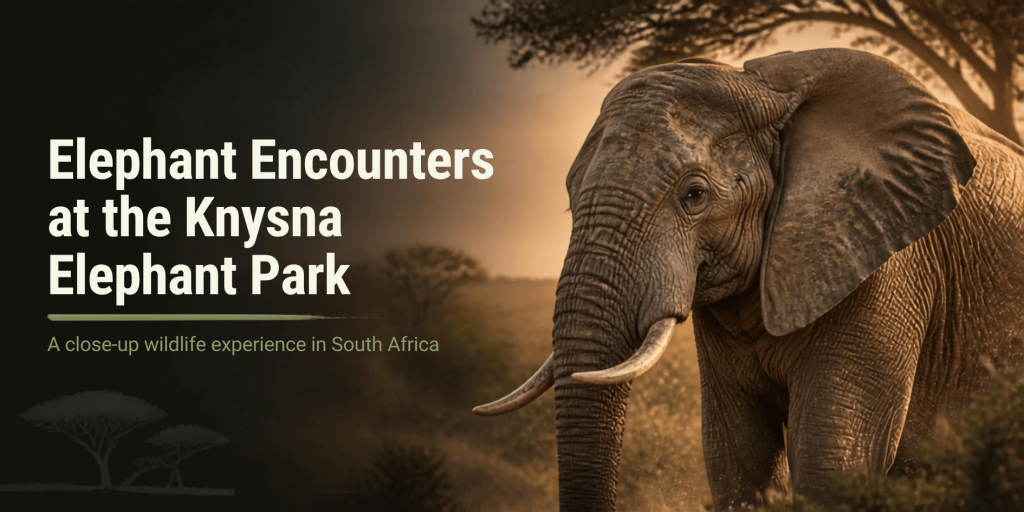
Elephants once roamed the ancient forests around Knysna in far greater numbers than today, and while wild sightings are now extremely rare, the Knysna Elephant Park offers visitors a chance to get close to these animals in a dedicated sanctuary setting just outside town.
About the Sanctuary
The park is home to elephants that have been rescued or orphaned, many of whom would not have been able to survive in the wild without intervention. Rather than presenting the animals as a performance attraction, the park focuses on education, explaining each elephant’s history and the broader challenges facing elephant conservation in the region and across Africa.
What a Visit Involves
Guided tours typically include time observing the elephants up close, with guides sharing information about elephant behaviour, social structures, and the specific stories of the animals in the park’s care. Depending on the package chosen, visitors may have the opportunity for closer, supervised interactions, though the park’s approach has shifted over the years toward more observation-focused experiences in line with changing views on animal welfare.
Why the History of Knysna’s Forest Elephants Matters
The story of the Knysna forest elephants, once a well-known population that dwindled due to hunting and habitat loss over the past two centuries, adds an extra layer of context to a visit. Learning about this history alongside meeting the park’s current residents gives a fuller picture of the region’s relationship with these animals over time.
Planning Your Visit
The park is easily reached as a day trip from Knysna, Plettenberg Bay, or George, and visits typically last one to two hours depending on the tour option selected. It’s a good stop for families, and guides are generally well equipped to answer questions from visitors of all ages.
Tips for Visiting the Knysna Elephant Park
- Book ahead during school holidays and peak season, as tour slots can fill quickly.
- Ask your guide about the individual elephants’ backstories. It adds real depth to the visit.
- Consider combining your visit with a stop at Monkeyland or Birds of Eden, both within easy reach.
How the Park Has Evolved
Like many wildlife sanctuaries, the Knysna Elephant Park’s approach to visitor interaction has shifted over time in response to a broader, evolving understanding of elephant welfare and natural behaviour. Where earlier visits sometimes emphasised close contact and feeding, more recent programmes tend to place greater weight on observation and education, with guides explaining these changes as part of the tour itself. It’s worth checking the current tour options directly before you visit, since offerings can change from year to year.
What You’ll Take Away from the Visit
Beyond the immediate experience of seeing elephants at close range, most visitors leave with a better understanding of the pressures facing elephant populations both locally and across the continent, from habitat loss to the illegal wildlife trade. Guides are generally well versed in these broader conservation issues, and a visit here often prompts more reflection than a typical wildlife attraction, particularly for visitors travelling with older children or teenagers interested in conservation.
Combining It with Other Nearby Attractions
The elephant park sits within easy reach of both Monkeyland and Birds of Eden, making it simple to combine two or three wildlife-focused stops into a single day if you’re travelling through the Plettenberg Bay area. Grouping these visits together also tends to work out more efficient timing-wise, since you’re not backtracking across long distances between attractions that are, in reality, only a short drive apart.
A visit to the Knysna Elephant Park is as much about understanding the region’s conservation history as it is about seeing elephants up close, making it one of the more thoughtful wildlife stops along the Garden Route.