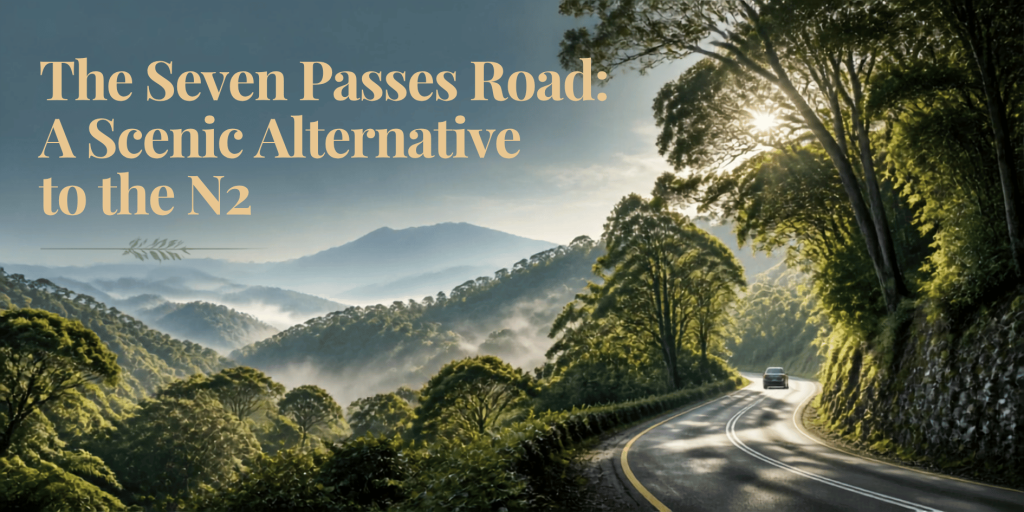
Long before the N2 highway existed, the road between George and Knysna wound through a series of steep river valleys and forested passes, built by hand in the 1800s under the direction of road engineer Thomas Bain. Today, that route survives as the Seven Passes Road, and it remains one of the most rewarding scenic drives on the Garden Route for anyone willing to trade highway speed for a slower, more textured journey.
What Makes It Special
As the name suggests, the road crosses seven river passes, each with its own character, from deep, shaded gorges dripping with ferns to open stretches with views across farmland and forest. Much of the route runs through indigenous forest, and the road itself, with its old stone bridges and narrow curves, feels like a piece of living history rather than just a scenic detour.
What to Expect on the Drive
The road is unpaved for long stretches, so a bit of patience is needed, and it’s not the route to take if you’re in a rush or driving a low-clearance vehicle in wet weather. In good conditions, most cars manage it comfortably, but it’s worth checking recent road conditions before you go, since forest roads can be affected by rain and fallen debris after storms.
Stops Along the Way
Several of the passes have small viewpoints or pull-offs worth stopping at, and the route passes close to hiking trails and picnic spots tucked into the forest. If you have time, building in a stop at one of the old stone bridges or a quiet river crossing adds to the sense of stepping back into an earlier, slower era of travel through this landscape.
Planning Your Drive
The full Seven Passes route takes considerably longer than the N2, often two to three hours depending on stops, compared to under an hour on the highway. It’s best done as a dedicated half-day activity rather than squeezed in as a shortcut, and it’s particularly rewarding for photographers, given the changing light through the forest canopy.
Tips for the Seven Passes Road
- Allow extra time, and don’t attempt it if you’re pressed for a flight or ferry connection.
- Fill up with fuel before you leave George or Knysna, since there’s little available along the route itself.
- Check recent conditions locally after heavy rain, as sections can become muddy or eroded.
The Road’s History
Built in stages during the 1860s and 1870s, the Seven Passes Road was considered a major feat of engineering in its time, cutting through terrain that had previously made overland travel between George and Knysna slow and difficult. Some of the original stonework on bridges and retaining walls still survives today, a reminder of just how much manual labour went into carving a usable road through this landscape long before modern construction equipment existed.
A Good Fit for Photography and Slow Travel
Because the route moves through changing light conditions as it dips in and out of forest cover, it’s a particularly rewarding drive for anyone interested in photography, whether that’s capturing the dappled light through the canopy or the old stone bridges themselves. It also suits travellers who enjoy the idea of the journey being part of the destination, rather than simply a means of getting from one town to the next.
Doing It as Part of a Loop
Rather than driving the Seven Passes Road one way and doubling back, many travellers use it as one leg of a loop, taking the N2 in one direction and the older road in the other. This way you get the convenience of the highway for one leg of the trip and the scenery of the historic route for the other, without needing to retrace your steps or add significant extra driving time to your day.
If the N2 has started to feel like just another highway, the Seven Passes Road is a reminder of how much more there is to see when you slow down and take the long way around.