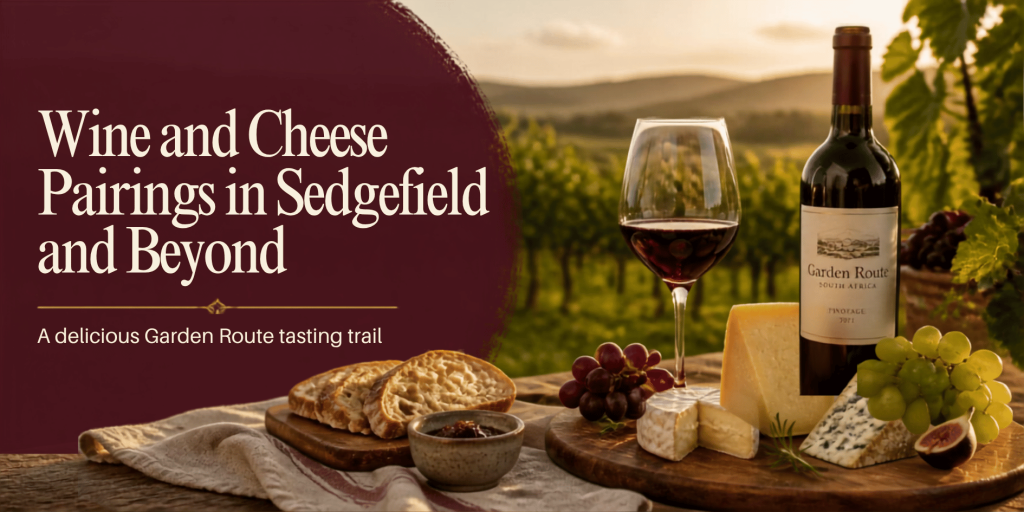
The Garden Route doesn’t have the sprawling vineyards of the Cape Winelands, but that’s exactly what makes its wine and cheese scene so appealing. Small, independent producers dotted between George, Sedgefield, and Knysna offer a more relaxed, less touristy version of a wine tasting, often paired with locally made cheese and a view of forest or lagoon instead of rows of vines.
Why Sedgefield Is a Good Base
Sedgefield sits between Wilderness and Knysna and has become known for its slower pace and growing food scene, including its Saturday craft market. It’s a convenient base for exploring smaller farm shops and producers in the surrounding hills, many of which sell their own cheese, olives, and preserves alongside wine from smaller Western Cape estates.
What to Expect from a Pairing
Unlike the formal tasting rooms of Stellenbosch or Franschhoek, wine and cheese pairings here tend to be simpler and more personal. Expect a board of two or three local cheeses, perhaps a soft goat’s cheese, a mature cheddar, and something blue, paired with two or three wines chosen to complement each one. Staff are usually happy to talk you through why a particular pairing works, without the formality of a big wine estate.
Building Your Own Pairing Afternoon
If you’d rather put together your own spread, farm stalls and delis around George and Knysna sell good local cheese, and bottle stores in the area stock a solid range of Western Cape wines at reasonable prices. Pack a cheese board, a bottle of something crisp and white for soft cheeses, or a fuller-bodied red for harder cheeses, and find a spot with a view, whether that’s the Knysna Lagoon, the Sedgefield dunes, or a quiet forest clearing.
Tips for a Relaxed Pairing Experience
- Ask what’s made locally versus what’s brought in from further afield. Both are worth trying, but local products often have a story worth hearing.
- Pace yourself between stops if you’re visiting more than one producer in a day, and arrange a designated driver if needed.
- Visit smaller stalls and shops directly. Prices are usually better than at restaurants, and you’re supporting the producers directly.
Finding the Right Spot for Your Pairing
Part of the appeal of a Garden Route wine and cheese afternoon is choosing where to sit down and enjoy it. A grassy patch near the Sedgefield dunes, a bench overlooking the Knysna Lagoon, or a quiet forest clearing near George all work well, and each changes the feel of the experience. Coastal spots suit a crisp white wine on a warm afternoon, while forest settings pair nicely with a heavier red and a firmer cheese, simply because the cooler, shaded surroundings call for something a little more substantial.
Making It a Longer Outing
If you want to turn a single pairing into a full afternoon, consider visiting two or three smaller producers in sequence, spacing them out with a short scenic drive between each. This works particularly well around Sedgefield and Knysna, where distances are short enough to visit multiple spots without spending the whole day behind the wheel. Just remember to pace yourself and arrange transport if you’re sampling wine at each stop, since the relaxed nature of these visits can make it easy to lose track of how much you’ve tasted.
Bringing Some Home
Most small producers are happy to sell cheese, preserves, and sometimes bottled wine to take with you, and it’s worth asking directly rather than assuming everything on offer is only for tasting on site. A few well-chosen items packed carefully for the road make a good souvenir of the trip, and buying directly from the producer usually means fresher stock and a better price than you’d find at a delicatessen back home.
A wine and cheese afternoon on the Garden Route won’t feel like a Winelands tour, and that’s the point. It’s a quieter, more personal way to taste the region, one board at a time.