
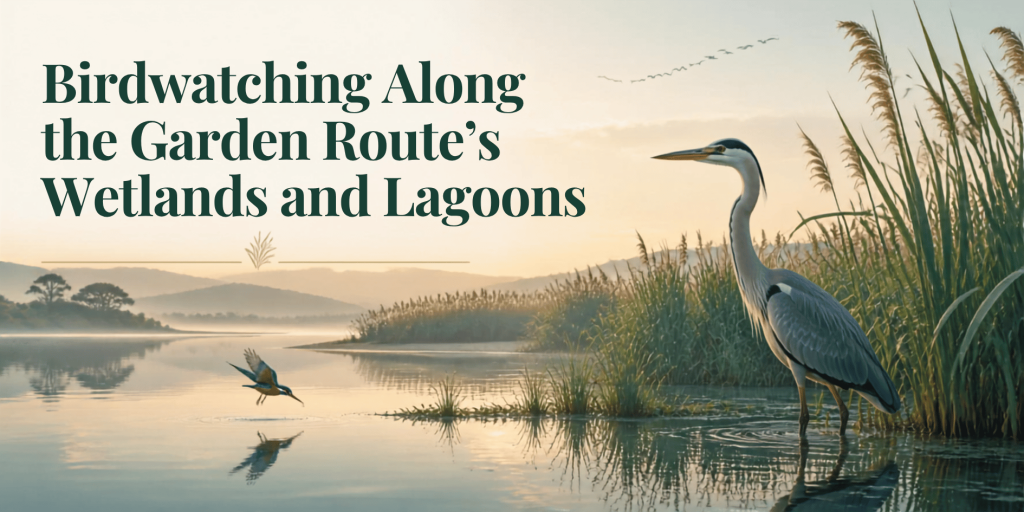
Between its lagoons, wetlands, and river mouths, the Garden Route supports a remarkable variety of birdlife, making it a rewarding destination for birdwatchers, whether you’re a serious lister or just someone who enjoys spotting the occasional kingfisher or heron on holiday.
The Wilderness Wetlands
The Wilderness section of the Garden Route National Park, with its chain of lakes and surrounding reed beds, is one of the richest birding spots in the region. Kayaking or canoeing on the lakes offers close-up views of waterbirds, while the reeds and wetland edges attract a variety of smaller, harder-to-spot species. Early morning is generally the best time to visit, when birds are most active and the water is calm.
Knysna Lagoon
The Knysna Lagoon, with its mix of open water, mudflats, and mangrove-like vegetation around Thesen Islands, attracts a good range of wading birds and waterfowl. Walking or cycling routes around the lagoon edge offer easy access without needing specialist equipment, and even a short stroll along the waterfront can turn up sightings of herons, egrets, and various gulls and terns.
Plettenberg Bay’s Estuaries
The Keurbooms and Bitou river estuaries near Plettenberg Bay add another rich habitat to the region’s birding options, particularly for those interested in kingfishers and other river-associated species. A short paddle or boat trip up the Keurbooms River is a popular way to combine birdwatching with a relaxed, scenic outing.
Forest Birding
Away from the water, the indigenous forests around Knysna and Tsitsikamma host their own set of forest-specialist birds, some of which are notoriously shy and best spotted with patience and a good pair of binoculars rather than a checklist mentality.
Tips for Birdwatching on the Garden Route
- Bring binoculars and, if possible, a field guide or app covering Southern African birds.
- Visit wetland areas early in the morning for the most activity and the calmest light for photography.
- Move slowly and quietly, particularly in forest areas where birds are more easily disturbed than on open water.
Best Times of Year for Birding
While birdwatching is possible year-round along the Garden Route, migratory species passing through during summer months add extra variety to what’s already a rich resident bird population. Wetland areas tend to be at their busiest when water levels are moderate, since very high or very low water can push birds away from their usual feeding grounds. Checking recent local reports or asking at a nearby nature reserve office before heading out can help you time your visit for the best activity.
Combining Birding with Other Activities
Birdwatching pairs naturally with other quiet, water-based activities along the Garden Route, particularly kayaking on the Wilderness lakes or a boat trip up the Keurbooms River, since both put you at water level where birds are easiest to observe without disturbing them. Even a scenic drive along the coast can turn into impromptu birding if you keep binoculars within reach and are willing to pull over at the right moment.
Getting Started Without Specialist Gear
You don’t need expensive equipment to enjoy birdwatching here. A basic pair of binoculars and a simple field guide or phone app covering regional species is enough to get started, and many of the more common waterbirds are easy to identify even for a complete beginner. As your interest grows, upgrading your gear or joining a guided birding walk with a local expert is a natural next step, but it’s not a prerequisite for a rewarding first outing.
You don’t need to be a dedicated birder to enjoy this side of the Garden Route. A quiet morning by a lagoon or wetland, binoculars in hand, is one of the simplest and most rewarding ways to slow down and notice the region’s wildlife.